


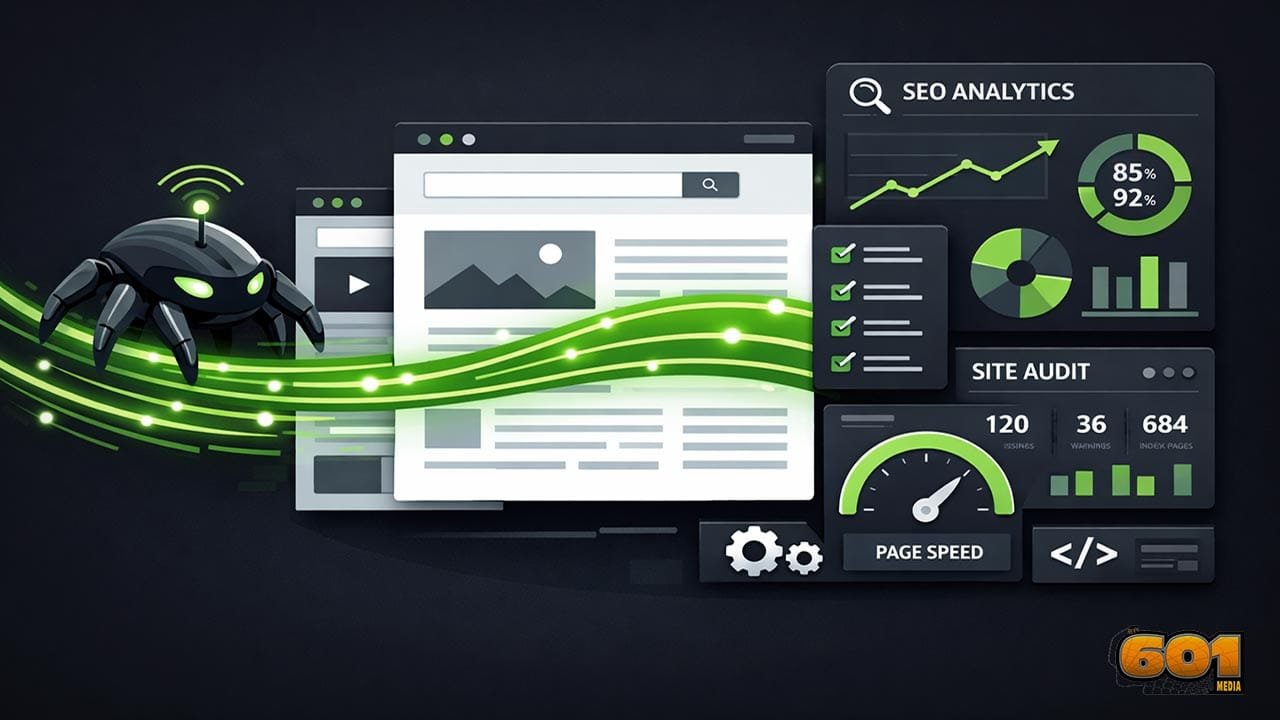
Why Screaming Frog Is So Good for SEO?
Screaming Frog has become one of the most trusted SEO tools in the industry because it replicates how search engines crawl websites, turning complex technical SEO issues into clear, actionable insights that directly impact rankings, performance, and indexability.
Table of Contents
- What Screaming Frog Is and How It Works
- Why Technical SEO Depends on Screaming Frog
- On-Page SEO Insights at Scale
- Site Architecture and Crawl Budget Optimization
- Powerful Integrations for Advanced SEO Analysis
- Why Agencies and Enterprises Rely on It
- Limitations and When to Use Other Tools
- Top 5 Frequently Asked Questions
- Final Thoughts
- Resources
What Screaming Frog Is and How It Works
Screaming Frog developed Screaming Frog SEO Spider as a desktop-based crawler that simulates how Google and other search engines crawl and interpret a website. Instead of sampling pages, it crawls URLs systematically, collecting data on status codes, metadata, headers, internal links, and directives that influence indexing.
What makes Screaming Frog exceptional is precision. It does not estimate or infer. It reports exactly what the crawler encounters, making it indispensable for diagnosing real-world SEO problems rather than theoretical ones.
Why Technical SEO Depends on Screaming Frog
Technical SEO failures often remain invisible until rankings drop. Screaming Frog surfaces these issues immediately.
It identifies broken links, redirect chains, server errors, orphaned pages, canonical conflicts, duplicate content, and incorrect noindex or robots directives. These issues directly affect crawlability and indexation, two foundational ranking factors according to Google’s own documentation.
By exporting crawl data into spreadsheets or BI tools, SEO professionals can prioritize fixes based on scale and impact, transforming technical audits from guesswork into structured engineering tasks.
On-Page SEO Insights at Scale
Manual on-page SEO audits rarely scale beyond a few hundred pages. Screaming Frog removes this limitation.
It analyzes title tags, meta descriptions, H1 and H2 headings, image alt attributes, word counts, and response times across entire domains. This allows SEOs to detect patterns such as missing metadata, over-optimized titles, thin content clusters, or inconsistent heading structures.
For content-led SEO strategies, this visibility is critical. It enables data-driven optimization instead of subjective content revisions.
Site Architecture and Crawl Budget Optimization
Search engines allocate a limited crawl budget to each site. Poor internal linking wastes that budget.
Screaming Frog visualizes internal link depth, identifies pages buried too deeply in the architecture, and highlights orphaned URLs with no internal links. This insight is essential for large sites, ecommerce platforms, and publishers where crawl efficiency directly impacts how fast new or updated content ranks.
By restructuring internal links based on crawl data, sites often see faster indexation and improved ranking stability.
Powerful Integrations for Advanced SEO Analysis
Screaming Frog integrates seamlessly with Google Analytics, Google Search Console, PageSpeed Insights, and log file data.
This combination allows SEOs to correlate crawl data with user behavior, impressions, clicks, and performance metrics. For example, you can identify pages that receive impressions but are blocked by technical issues, or high-value URLs suffering from slow load times.
Log file analysis further reveals how search engine bots actually behave, enabling crawl budget optimization based on real bot activity rather than assumptions.
Why Agencies and Enterprises Rely on It
Agencies and enterprise SEO teams favor Screaming Frog because it is transparent, flexible, and cost-effective.
Unlike cloud tools that abstract data, Screaming Frog gives full control over crawl configuration, user agents, rendering modes, and extraction rules. Custom crawls can be built for JavaScript-heavy sites, international SEO audits, or migration testing.
For innovation and technology management teams, this flexibility supports experimentation, automation, and integration into larger data pipelines.
Limitations and When to Use Other Tools
Screaming Frog is not a keyword research or backlink discovery platform. It excels at diagnostics, not market demand analysis.
Its desktop nature means large crawls require sufficient hardware resources. For massive sites, cloud crawlers may be used alongside Screaming Frog rather than replacing it.
Understanding these boundaries ensures Screaming Frog is used where it delivers maximum strategic value.
Top 5 Frequently Asked Questions
Final Thoughts
Screaming Frog is so good for SEO because it reveals the technical truth of a website. It strips away assumptions and exposes how search engines actually interact with pages, links, and content. In an era where algorithm updates increasingly reward technical excellence and user experience, Screaming Frog remains one of the most strategically valuable tools for sustainable SEO growth.







Leave A Comment