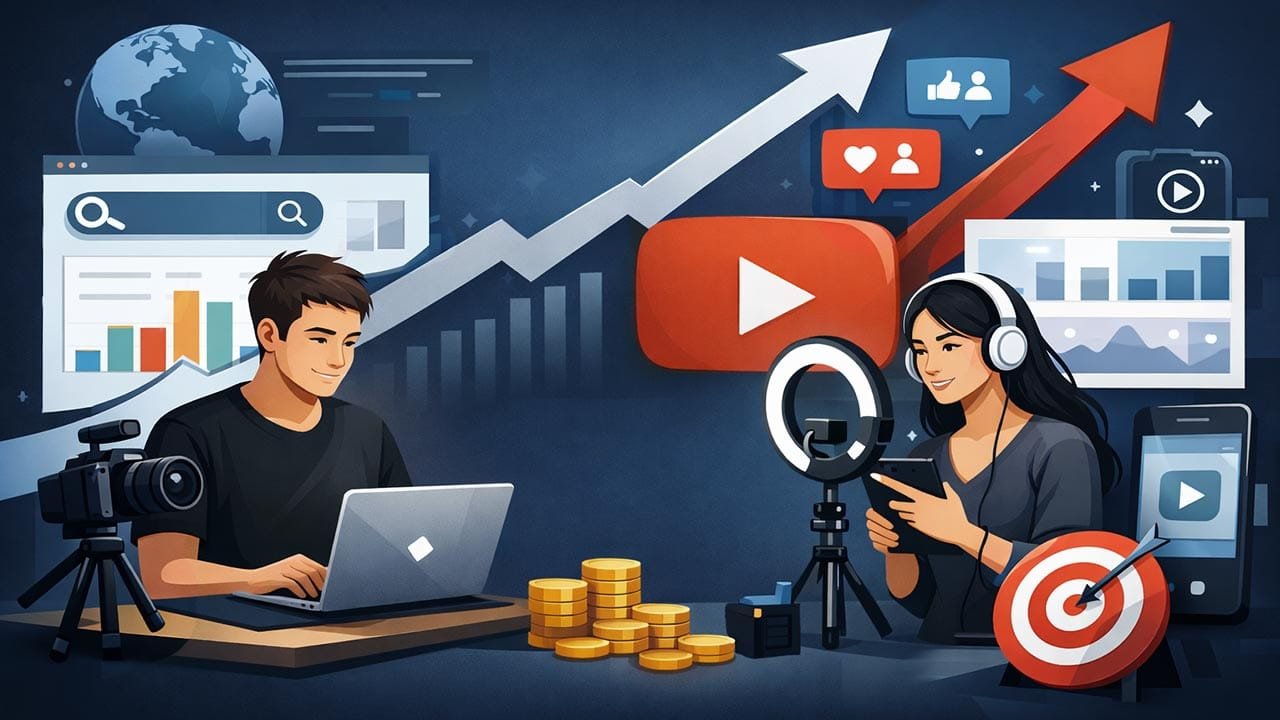
Traffic Growth & Audience Building
Traffic growth and audience building are not side effects of publishing content. They are the direct result of deliberate systems designed to capture attention, distribute value, and convert visibility into long-term reach. This page explains how creators can build repeatable demand engines that drive traffic across platforms while compounding audience growth over time.
Table of Contents
- Understanding Traffic Growth Fundamentals
- The Mechanics of Audience Building
- Content as a Demand Generation Engine
- Platform-Specific Traffic Growth Strategies
- YouTube SEO and Discoverability
- Aligning Organic Traffic with Paid Growth
- Analytics, Feedback Loops, and Optimization
- Scaling Traffic Without Burning Out
- Future-Proofing Your Traffic Strategy
- Top 5 Frequently Asked Questions
- Final Thoughts
- Resources
Understanding Traffic Growth Fundamentals
Traffic growth is the process of increasing the number of qualified users exposed to your content across search engines, social platforms, and owned channels. Sustainable traffic is not driven by virality alone. It is driven by alignment between user intent, content format, and distribution leverage.
There are three core traffic types creators must understand. Search traffic captures existing demand through keywords and queries. Suggested or recommended traffic leverages platform algorithms to surface content based on engagement signals. Direct and referral traffic compounds brand trust and audience loyalty.
Creators who grow consistently focus on intent matching rather than volume chasing. A smaller audience that returns repeatedly has more long-term value than large numbers of one-time visitors. Traffic growth becomes meaningful only when it feeds an audience ecosystem.
The Mechanics of Audience Building
Audience building converts traffic into retained attention. An audience exists when users choose to follow, subscribe, or return without being prompted by algorithms.
Audience growth relies on three psychological drivers: relevance, consistency, and perceived authority. Relevance ensures the content solves a recurring problem. Consistency trains expectation. Authority is built through clarity, specificity, and demonstrated outcomes.
Successful creators design content arcs rather than isolated posts. Each piece of content should lead logically to the next step in the user journey. This turns casual traffic into habitual consumption.
Content as a Demand Generation Engine
Content functions as a demand generation engine when it attracts, educates, and qualifies users simultaneously. This is especially critical for creators selling courses, memberships, or services.
Demand-generating content focuses on problems before solutions. It educates users on what to pay attention to, what mistakes to avoid, and what success actually looks like. This reframes purchasing decisions as logical next steps rather than sales events.
Long-form educational content, pillar pages, and video tutorials outperform short-term tactics because they accumulate authority and backlinks while remaining evergreen.
Platform-Specific Traffic Growth Strategies
Each platform rewards different behaviors. Treating all platforms the same limits growth.
Search engines prioritize topical authority, internal linking, and content depth. Social platforms reward early engagement velocity and retention. Video platforms prioritize watch time and session duration.
Creators should repurpose core ideas across formats rather than duplicate content. One pillar topic can generate blog posts, videos, short clips, email sequences, and community discussions without diluting quality.
YouTube SEO and Discoverability
YouTube operates as both a social platform and a search engine. Traffic growth on YouTube depends on optimizing for both discovery and suggested placement.
Effective YouTube SEO starts with topic validation. High-performing creators research viewer questions, not keywords alone. Titles should frame outcomes. Descriptions should expand context. Thumbnails should communicate contrast and curiosity instantly.
Watch time, retention curves, and click-through rate influence how aggressively content is distributed. Improving even one of these metrics can unlock exponential visibility.
Aligning Organic Traffic with Paid Growth
Paid growth amplifies what already works. It should never replace organic validation.
Creators using paid ads successfully start by identifying their highest-retention content and best-converting pages. Paid traffic is then layered on to accelerate learning and reach.
The strongest demand systems combine organic content for trust with paid distribution for speed. This alignment lowers acquisition costs while increasing lifetime value.
Analytics, Feedback Loops, and Optimization
Traffic growth without measurement is guesswork. Audience building without feedback is blind repetition.
Key metrics include traffic sources, engagement depth, return frequency, and conversion paths. Creators should review analytics weekly and adjust monthly.
Optimization is not about chasing every metric. It is about identifying bottlenecks. Low clicks indicate messaging issues. Low retention indicates misaligned expectations. Low conversions indicate trust gaps.
Scaling Traffic Without Burning Out
Burnout is a growth killer. Sustainable traffic systems reduce creative pressure by relying on frameworks instead of inspiration.
Batch production, content templates, and editorial calendars allow creators to scale without sacrificing quality. Delegation and automation further protect focus.
Creators who last prioritize clarity over volume. Fewer, better ideas outperform constant output with no strategic direction.
Future-Proofing Your Traffic Strategy
Algorithms change. Attention habits shift. Platforms rise and fall. Audience relationships endure.
Future-proof creators invest in owned channels such as email lists and communities while leveraging platforms for discovery. They build brands, not just feeds.
Traffic growth becomes resilient when the audience follows the creator, not the algorithm.
Top 5 Frequently Asked Questions
Final Thoughts
Traffic growth and audience building are not marketing tactics. They are strategic assets. Creators who treat visibility as a system rather than a stroke of luck build momentum that compounds year after year.
The most important takeaway is this: sustainable growth comes from aligning content, distribution, and audience trust into a single demand engine. When creators understand how traffic flows and why audiences stay, growth becomes predictable instead of accidental.
Resources
- Search Engine Journal – SEO and Content Marketing Research
- YouTube Creator Academy – Algorithm and Analytics Guides
- HubSpot – Demand Generation and Growth Studies
- Content Marketing Institute – Audience Building Frameworks

Related Traffic Growth & Audience Building Learning…
Continue learning other topics…
How to Create Expert-Level SEO Content Using ChatGPT
How to Create Expert-Level SEO Content Using ChatGPT Modern SEO content creation is no longer driven [...]

Building an Audience
Building an Audience: Tactics That Work in 2026 Audience building in 2026 is no longer about [...]

Run Out of Customers, here’s what to consider
Why Most Entrepreneurs Run Out of Customers – And How to Stay Top of Mind Entrepreneurs [...]

One-Person Business
One-Person Businesses, Creative Workflows, and Lifestyle by Design Key Takeaways One-Person Businesses: Overview and success stories. [...]

ChatGPT SEO Optimized Blog Post
Creating SEO Optimized Blog Post with ChatGPT ChatGPT SEO Optimized Blog Post are crucial if you're [...]