


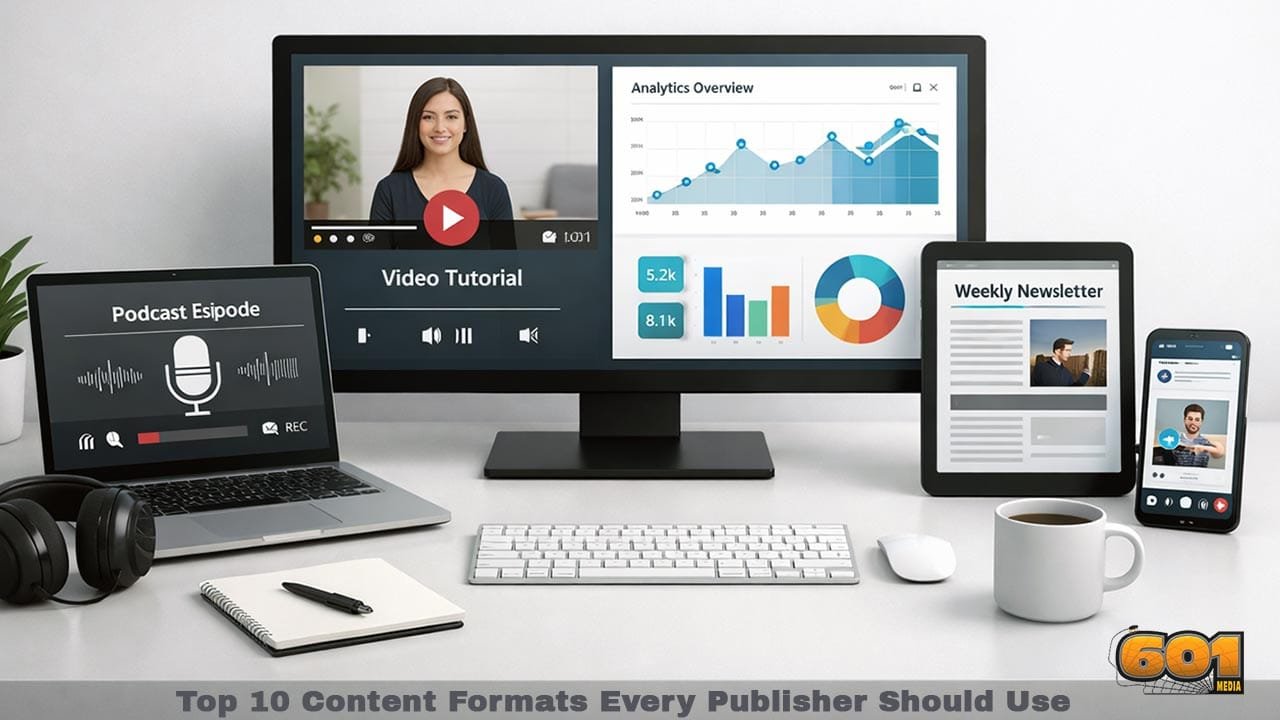
Top 10 Content Formats Every Publisher Should Use to Maximize Reach and Revenue
We have a fragmented media landscape, publishers can no longer rely on a single content format to capture attention or sustain revenue. Audience behavior has shifted toward multi-format consumption, driven by mobile-first habits, platform algorithms, and declining attention spans. Publishers that diversify formats see higher engagement rates, longer session durations, and stronger monetization performance.
Table of Contents
- Long-Form Articles
- Short-Form News Updates
- Video Content
- Podcasts
- Email Newsletters
- Interactive Content
- Data Visualizations
- User-Generated Content
- Social Media Native Content
- Evergreen Guides
- Top 5 Frequently Asked Questions
- Final Thoughts
- Resources
1. Long-Form Articles
Long-form content remains the backbone of authority-driven publishing. Articles exceeding 1,500 words consistently outperform short posts in search visibility, backlink acquisition, and time-on-page metrics. Publishers use long-form articles to establish subject-matter expertise, explain complex topics, and build long-term organic traffic. Research shows that long-form content generates up to 77 percent more backlinks than shorter pieces. For publishers, this format supports premium advertising placements, sponsorships, and subscriber-only access models.
2. Short-Form News Updates
Short-form updates cater to speed-driven audiences who want information quickly. These pieces typically range from 150 to 400 words and are optimized for mobile consumption. Publishers use them to cover breaking news, trend alerts, and real-time updates. This format increases publishing velocity, boosts return visits, and feeds social and search discovery pipelines. When combined with push notifications, short-form content becomes a powerful retention tool.
3. Video Content
Video is now the highest-performing content format across digital platforms. Audiences retain 95 percent of a message delivered via video compared to 10 percent through text alone. Publishers leverage video for explainers, interviews, live streams, and short clips. Video also unlocks diversified revenue through pre-roll ads, sponsorships, and platform-based monetization programs. Publishers that adopt video-first workflows gain algorithmic preference across major distribution platforms.
4. Podcasts
Podcasting enables publishers to build intimate, high-trust relationships with audiences. Listeners spend an average of 30 to 45 minutes per episode, offering deep engagement unmatched by most formats. Publishers use podcasts to extend editorial brands, attract sponsorship revenue, and repurpose audio into articles, clips, and newsletters. Podcast audiences also show higher willingness to pay for premium subscriptions.
5. Email Newsletters
Email newsletters remain one of the highest ROI content formats available. They provide direct audience access without reliance on third-party algorithms. Open rates for niche publisher newsletters often exceed 30 percent. Publishers use newsletters for curation, original insights, and community-building. They also serve as primary conversion drivers for subscriptions, events, and memberships.
6. Interactive Content
Interactive formats such as quizzes, calculators, polls, and assessments increase engagement by encouraging active participation. Interactive content generates up to two times more conversions than passive formats. Publishers deploy interactivity to collect first-party data, personalize experiences, and increase dwell time. This format is especially valuable as privacy regulations limit third-party tracking.
7. Data Visualizations
Data visualization transforms complex information into digestible insights. Charts, infographics, and visual dashboards improve comprehension and shareability. Publishers that invest in visual storytelling see higher citation rates and stronger authority signals. This format is essential for data journalism, industry analysis, and research-backed reporting.
8. User-Generated Content
User-generated content builds authenticity and community trust. Reviews, testimonials, opinion submissions, and community stories allow publishers to scale content production while increasing audience loyalty. Publishers that feature audience voices report higher engagement and stronger brand affinity. Moderation and editorial oversight remain critical to maintaining quality and credibility.
9. Social Media Native Content
Native social content is designed specifically for each platform’s format, tone, and algorithm. This includes short videos, carousels, threads, and stories. Publishers use native content to expand reach, drive referral traffic, and build brand recognition. Platform-native formats consistently outperform link-based posts in visibility and engagement.
10. Evergreen Guides
Evergreen guides deliver long-term value by addressing timeless topics. These resources attract consistent traffic, generate leads, and support internal linking strategies. Publishers often gate premium evergreen content to drive subscriptions or use it as cornerstone content for SEO dominance. Regular updates keep guides relevant and authoritative.
Top 5 Frequently Asked Questions
Final Thoughts
The future of publishing belongs to format-diverse strategies. Publishers who rely on a single content type expose themselves to platform risk, audience fatigue, and declining revenue streams. By adopting a balanced mix of written, visual, audio, and interactive formats, publishers increase resilience, expand reach, and unlock sustainable growth. Content format innovation is no longer optional; it is a strategic necessity.
Resources
- Content Marketing Institute: Content Format Performance Studies
- HubSpot: Content Engagement Benchmarks
- Nielsen: Media Consumption Reports
- Pew Research Center: Digital News Consumption Trends







Leave A Comment