
Content Marketing & Optimization
A performance-focused pillar guide for established publishers and marketers who want to move beyond content creation into systematic optimization, audience leverage, and revenue-aligned growth. This page supports skill deepening, advanced training, and applied optimization labs within Content Publisher Academy.
Table of Contents
- The Strategic Foundations of Content Marketing
- The Publisher-Led Content Model
- Content Optimization as a Performance Discipline
- Search Intent, Topical Authority, and SERP Ownership
- Building Scalable Content Systems
- Distribution, Amplification, and Channel Leverage
- Measurement, Attribution, and Optimization Loops
- Monetization and Revenue Alignment
- Governance, Quality Control, and Editorial Standards
- The Future of Content Marketing for Publishers
- Top 5 Frequently Asked Questions
- Final Thoughts
- Resources
The Strategic Foundations of Content Marketing
Content marketing is no longer a traffic-generation tactic. For established publishers and marketers, it is an operating system for demand capture, audience trust, and long-term business value. At its core, content marketing aligns information supply with audience intent across the full decision lifecycle.
High-performing content programs are built on three strategic pillars: relevance, consistency, and leverage. Relevance ensures alignment with real audience problems and motivations. Consistency compounds authority over time. Leverage turns each asset into a reusable growth mechanism rather than a one-off publication.
Optimization begins at the strategy layer. Without clear positioning, audience definition, and success criteria, no amount of tactical SEO or conversion tuning will produce sustainable gains.
The Publisher-Led Content Model
Modern content leaders operate like professional publishers. This means thinking in terms of editorial portfolios, content lifecycles, and audience equity rather than campaigns.
The publisher model prioritizes owned platforms, recurring formats, and repeatable workflows. Instead of asking what content to create next, advanced teams ask how each piece strengthens topical authority, supports internal linking structures, and reinforces brand expertise.
This model also emphasizes depth over volume. Long-form, insight-rich content outperforms thin assets by generating backlinks, dwell time, and repeat visitation. For publishers, authority density within a niche matters more than breadth across unrelated topics.
Content Optimization as a Performance Discipline
Optimization is not editing. It is a structured process of diagnosing performance gaps and systematically improving outcomes.
High-maturity teams treat content like a living asset. They analyze historical performance, identify decay or opportunity signals, and apply targeted interventions. These include intent realignment, structural improvements, semantic expansion, UX enhancements, and conversion pathway optimization.
Optimization operates on multiple layers simultaneously: technical SEO, on-page relevance, narrative clarity, engagement mechanics, and commercial alignment. The goal is compounding improvement, not cosmetic change.
This discipline requires skills in data interpretation, experimentation design, and prioritization. It is where intermediate practitioners differentiate themselves from advanced operators.
Search Intent, Topical Authority, and SERP Ownership
Search engines reward clarity of intent fulfillment. Advanced content optimization begins with precise intent classification: informational, navigational, commercial, or transactional.
Topical authority is achieved by building comprehensive content clusters that address a subject from multiple angles and stages. Pillar pages anchor these clusters, while supporting articles reinforce semantic depth and internal link equity.
SERP ownership means dominating not just one keyword, but an entire intent space. This includes featured snippets, People Also Ask coverage, and multi-ranking URLs. Achieving this requires continuous SERP analysis and adaptive content refinement.
Building Scalable Content Systems
Scalability is not about producing more content. It is about reducing marginal effort per performance gain.
Advanced content systems rely on standardized briefs, modular structures, reusable research components, and documented editorial processes. These systems allow teams to maintain quality while increasing throughput.
Technology plays a supporting role. Content management systems, optimization platforms, and analytics tools enable visibility and control. However, systems fail without skilled operators who understand why decisions are made, not just how.
Distribution, Amplification, and Channel Leverage
Publishing without distribution is incomplete execution. Established publishers treat distribution as an extension of content strategy, not an afterthought.
Owned channels such as email lists and communities provide compounding reach. Earned channels like search and backlinks deliver scalable acquisition. Paid amplification accelerates testing and visibility when used strategically.
Optimization at this stage focuses on message adaptation, timing, and format alignment per channel. The same core insight can be repurposed into multiple high-performing assets without dilution.
Measurement, Attribution, and Optimization Loops
Advanced measurement moves beyond vanity metrics. Traffic alone is insufficient. Performance is evaluated through engagement depth, return visits, assisted conversions, and revenue influence.
Attribution models must reflect content’s role across long decision cycles. This requires integrating analytics, CRM data, and behavioral signals to understand true impact.
Optimization loops close the system. Insights from measurement feed back into strategy, content updates, and prioritization decisions. This continuous loop is what separates static libraries from performance engines.
Monetization and Revenue Alignment
For publishers, content is a revenue asset. Optimization must account for monetization pathways without compromising trust.
This includes aligning content with product positioning, sponsorship models, affiliate structures, or subscription value. The highest-performing content creates value first, then captures value naturally.
Revenue alignment also informs prioritization. Not all content deserves equal optimization investment. Advanced teams focus resources where audience intent and business outcomes intersect.
Governance, Quality Control, and Editorial Standards
As content operations scale, governance becomes critical. Editorial standards protect brand voice, factual accuracy, and ethical integrity.
Governance frameworks define approval workflows, update cadences, and accountability structures. They ensure optimization efforts enhance rather than erode credibility.
Quality control is not restrictive. It enables faster execution by reducing rework and inconsistency.
The Future of Content Marketing for Publishers
The future favors depth, expertise, and adaptability. Algorithmic changes increasingly reward original insight, experiential knowledge, and audience satisfaction signals.
AI will accelerate production, but optimization skill will determine outcomes. Publishers who invest in performance literacy, experimentation, and strategic thinking will outperform those who chase volume.
Content marketing is maturing into a core business discipline. Those who master optimization will own their markets.
Top 5 Frequently Asked Questions
Final Thoughts
Content marketing excellence is no longer about publishing more. It is about extracting more value from what you publish. Optimization is the force multiplier that turns content into a durable competitive advantage. For established publishers and marketers, mastery of optimization is the path to sustained authority, performance, and revenue growth.
Resources
- Content Marketing Institute
- Search Engine Journal
- Google Search Central Documentation
- HubSpot Research on Content Performance

Related Content Marketing & Optimization Learning…

Why Screaming Frog Is So Good for SEO?
Why Screaming Frog Is So Good for SEO? Screaming Frog has become one of the most [...]

What Is a Substack Note?
What Is a Substack Note? How It Works and How Users Actually Use It. A Substack [...]

What Is Substack?
What Is Substack and What Are People Using It For? What is Substack, how does it [...]

The Free Online Advertising Strategy Advanced Marketers Use
The Free Online Advertising Strategy Advanced Marketers Use to Scale Without Ad Spend This article breaks [...]
Continue learning other topics…

How YouTube Really Decides Who Gets Views
How YouTube Really Decides Who Gets Views: The Non-Random System Behind “Overnight” Growth If your YouTube [...]

Top 10 Content Formats Every Publisher Should Use
Top 10 Content Formats Every Publisher Should Use to Maximize Reach and Revenue We have a [...]

What to Consider When Choosing an Open Source LMS for Online Courses
What to Consider When Choosing an Open Source LMS for Online Courses Choosing an open source [...]
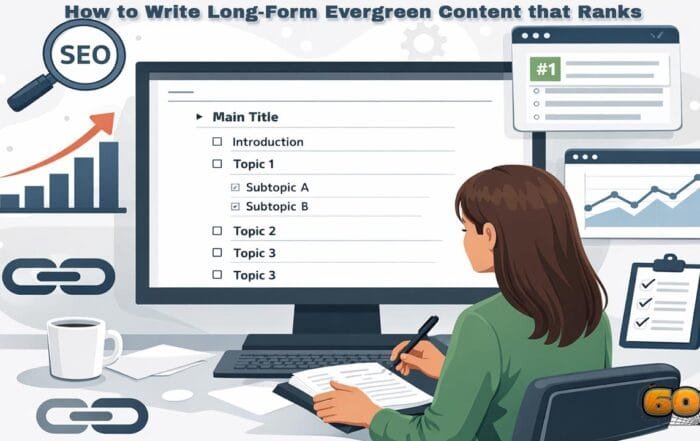
How to Write Long-Form Evergreen Content that Ranks
How to Write Long-Form Evergreen Content that Ranks Long-form evergreen content is the backbone of sustainable [...]

Introduction to Analyzing Content with ChatGPT
Introduction to Analyzing Content with ChatGPT Todays article explores Analyzing Content with ChatGPT and how it [...]