




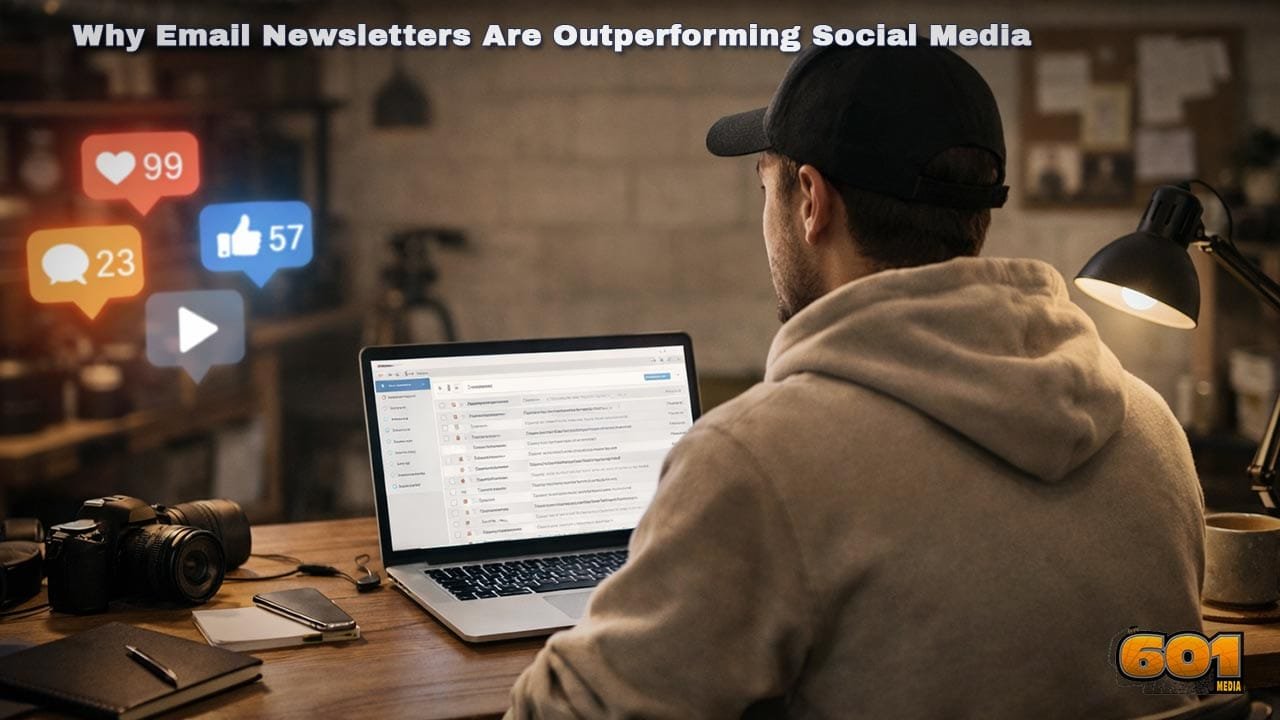
Why Email Newsletters Are Outperforming Social Media for Creators
Over the last decade, social media positioned itself as the default growth engine for creators. In 2026, that assumption is breaking down. Algorithms are unstable, reach is throttled, and monetization is increasingly indirect. In contrast, email newsletters—especially those powered by platforms like Substack—are quietly outperforming social media across engagement, trust, and revenue. The shift is not about nostalgia; it is about control, incentives, and long-term leverage. This article explains why email newsletters are outperforming social media for creators in 2026. It examines algorithm risk, audience ownership, engagement depth, monetization efficiency, and sustainability, showing why more creators are moving away from platforms like social networks and toward direct, email-first publishing models.
Table of Contents
- The Decline of Social Media for Creators
- How Email Newsletters Change the Dynamic
- Ownership vs Rented Attention
- Engagement Quality and Trust
- Monetization Efficiency
- Algorithm Risk and Platform Fragility
- Sustainability and Creator Burnout
- The Email-First Hybrid Approach
- Top 5 Frequently Asked Questions
- Final Thoughts
- Resources
The Decline of Social Media for Creators
Social media platforms were originally optimized for organic reach. That era is over. Today, creators face declining visibility unless they post frequently, follow trends, or pay for promotion. Even high-quality content is often buried beneath algorithmic priorities designed to maximize platform retention rather than creator success.
Monetization on social platforms is also indirect. Creators are rewarded with attention, not revenue. Turning views into income requires external funnels, sponsorships, or brand deals, all of which introduce dependency and volatility.
For many creators, social media has become a treadmill—more effort for diminishing returns.
How Email Newsletters Change the Dynamic
Email newsletters invert the power dynamic. Instead of competing for attention in a crowded feed, creators communicate directly with readers who have explicitly opted in. Delivery is predictable, and engagement is intentional.
Newsletters prioritize depth over frequency. A single high-quality issue can outperform dozens of short-form posts in terms of impact and revenue. This makes email a better fit for creators who produce analysis, education, or thoughtful commentary rather than reactive content.
Email also creates a private environment. The inbox is a quieter, more trusted space than public feeds, which increases attention and perceived value.
Ownership vs Rented Attention
The most important difference between email and social media is ownership. On social platforms, creators rent access to their audience. Algorithms, policy changes, or account restrictions can instantly sever that relationship.
With email newsletters, creators own their subscriber lists. This ownership provides portability, resilience, and leverage. Creators can move platforms, change tools, or evolve business models without losing their audience.
In an era of platform instability, ownership is not optional—it is foundational.
Engagement Quality and Trust
Engagement on social media is shallow by design. Likes, comments, and shares measure reaction, not commitment. Email engagement is deeper. Opens, replies, and paid subscriptions reflect genuine interest.
Trust builds faster in email because communication is consistent and personal. Readers associate the creator’s name with value delivered directly to them, not content encountered by chance.
This trust translates into higher conversion rates, stronger retention, and more meaningful feedback loops.
Monetization Efficiency
Email newsletters monetize more efficiently because they align value with payment. Subscriptions, memberships, and premium access are native to the medium. Creators are paid by readers, not advertisers.
This reduces incentives to chase scale. A small, engaged email list can outperform a massive social following in revenue. Predictable recurring income also improves planning and reduces dependence on external deals.
For creators building businesses rather than audiences alone, email offers superior economics.
Algorithm Risk and Platform Fragility
Algorithm risk is one of the most underestimated threats to creators. Social platforms regularly change distribution rules with little warning. Strategies that work one month can fail the next.
Email distribution is comparatively stable. While inbox algorithms exist, they are less volatile and more transparent than social feeds. Creators who focus on email reduce exposure to sudden reach collapse.
In 2026, risk management is a core creator skill. Email is a defensive asset.
Sustainability and Creator Burnout
Social media rewards constant presence. This creates pressure to post daily, respond immediately, and stay relevant at all times. Over time, this leads to burnout.
Email newsletters support healthier rhythms. Weekly or biweekly publishing is common and effective. Creators can work ahead, take breaks, and maintain boundaries without disappearing from their audience.
Sustainable systems outperform intense but short-lived efforts.
The Email-First Hybrid Approach
This is not an argument to abandon social media entirely. The most effective strategy for many creators is email-first with selective social use. Social platforms function as discovery channels, while email serves as the relationship and revenue layer.
In this hybrid model, creators stop optimizing for virality and start optimizing for conversion. Social posts invite readers into owned channels rather than attempting to monetize attention directly.
The result is less stress, more leverage, and stronger long-term outcomes.
Top 5 Frequently Asked Questions
Final Thoughts
The most important takeaway is that creators no longer win by maximizing reach—they win by maximizing ownership and trust. Social media excels at exposure, but email newsletters excel at relationships and revenue. In 2026, the creators who thrive are those who treat social platforms as optional inputs and email as their foundation. Email newsletters are not outperforming social media by accident; they are winning because the incentives finally align with creator success.









Leave A Comment