




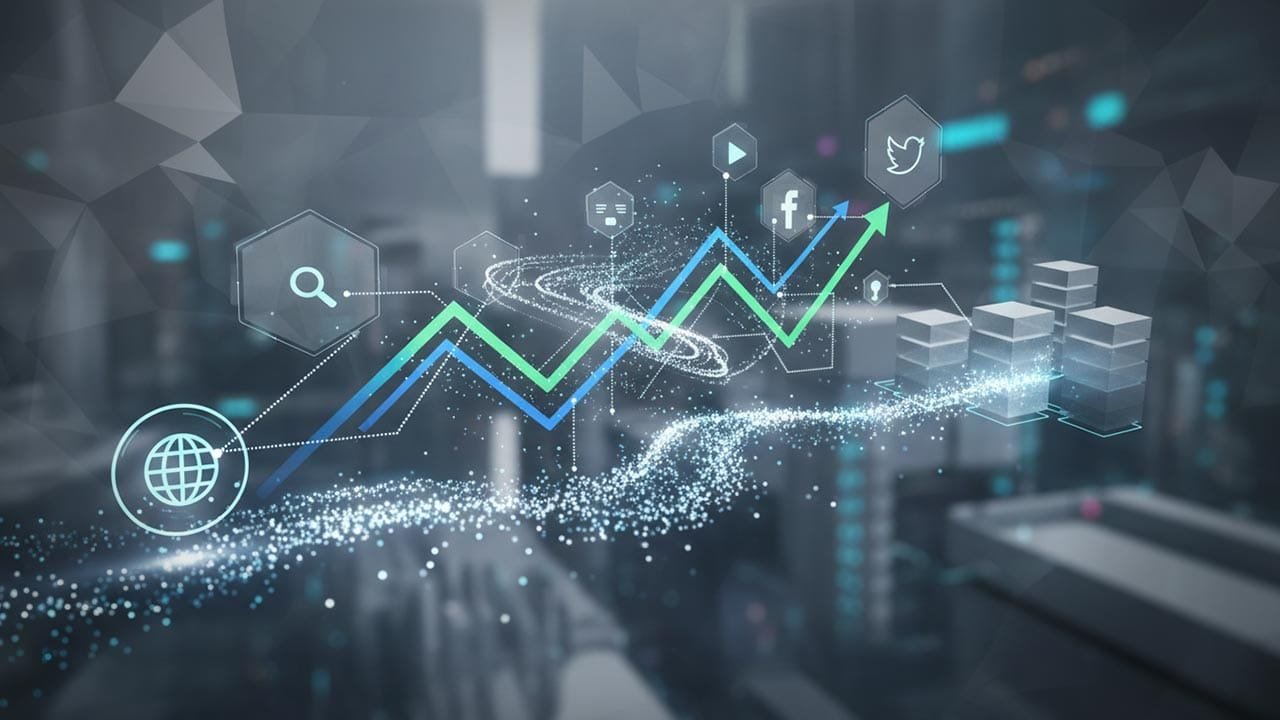
The Free Online Advertising Strategy Advanced Marketers Use to Scale Without Ad Spend
This article breaks down a performance-driven, free online advertising strategy designed for experienced marketers who want predictable growth without relying on paid traffic. By integrating owned media, behavioral targeting, and conversion-focused content, this system turns attention into compounding brand equity.
Table of Contents
- Why Free Advertising Still Works at Scale
- The Strategic Shift From Traffic Acquisition to Attention Capture
- Owned Media as the Core Growth Engine
- Content as a Conversion System, Not a Branding Exercise
- Distribution Without Paid Promotion
- Optimization, Measurement, and Compounding Returns
- Common Failure Points Advanced Marketers Must Avoid
- Top 5 Frequently Asked Questions
- Final Thoughts
- Resources
Why Free Advertising Still Works at Scale
Free online advertising is often misunderstood as entry-level marketing. In reality, it is a system-level approach that reallocates spend from platforms to infrastructure. Instead of renting attention, advanced marketers build mechanisms that attract, qualify, and convert users organically.
Search engines, social platforms, and content aggregators still reward relevance, authority, and engagement. Algorithms increasingly prioritize signals that cannot be bought directly, such as dwell time, content depth, and audience trust. This creates structural advantages for marketers who invest in strategic content ecosystems rather than short-term ad arbitrage.
The Strategic Shift From Traffic Acquisition to Attention Capture
Paid advertising optimizes for impressions and clicks. Free advertising optimizes for attention and retention. The strategic shift occurs when marketers stop asking how to get traffic and start asking how to keep it.
Attention capture relies on precision messaging, intent alignment, and context. This means content must be designed to intercept users already searching for solutions, not interrupt them with promotions. The most effective free advertising strategies align tightly with user intent across the awareness-to-decision continuum.
Owned Media as the Core Growth Engine
At the center of any scalable free advertising strategy is owned media. This includes websites, blogs, email lists, communities, and proprietary platforms. Owned media compounds in value over time and insulates growth from platform volatility.
Advanced marketers treat owned media as performance assets. Pages are built around keyword clusters, conversion paths are intentionally designed, and analytics are deeply integrated. Every piece of content serves a strategic role, whether it is lead generation, sales enablement, or customer education.
Content as a Conversion System, Not a Branding Exercise
Content becomes free advertising only when it is engineered for outcomes. High-performing systems use layered content architectures where top-of-funnel assets feed into mid-funnel authority builders and bottom-funnel conversion assets.
Long-form content addresses complex buying objections. Short-form content amplifies reach. Evergreen assets create sustained inbound demand. The key is cohesion. Content must operate as a unified system rather than isolated campaigns.
Advanced teams map content directly to conversion goals and continuously refine based on performance data.
Distribution Without Paid Promotion
Distribution is the primary failure point in free advertising. Creating content without a deliberate amplification strategy results in diminishing returns.
Organic distribution channels include search optimization, social algorithm alignment, partnerships, and community engagement. Successful marketers reverse-engineer platform incentives and publish content designed to trigger algorithmic visibility.
This includes optimizing for shareability, structuring content for skimmability, and publishing consistently within platform-native formats. Distribution is treated as a discipline, not an afterthought.
Optimization, Measurement, and Compounding Returns
Free advertising systems require the same rigor as paid campaigns. Advanced measurement focuses on cohort behavior, content-assisted conversions, and lifetime value attribution.
Optimization cycles involve updating existing assets, improving internal linking, and refining calls to action. Because assets persist, each optimization compounds future performance.
The most mature strategies operate on a flywheel model where traffic fuels engagement, engagement fuels authority, and authority fuels exponential reach.
Common Failure Points Advanced Marketers Must Avoid
Many experienced marketers fail at free advertising by applying paid-ad thinking to organic systems. Over-optimization, inconsistent publishing, and misaligned content intent undermine long-term performance.
Another common issue is impatience. Free advertising systems require upfront investment and delayed gratification. Teams that commit long enough to allow compounding effects consistently outperform those chasing short-term wins.
Top 5 Frequently Asked Questions
Final Thoughts
The free online advertising strategy outlined here is not a shortcut. It is a structural advantage. By shifting focus from buying traffic to building attention systems, advanced marketers create assets that appreciate over time.
The most important takeaway is this: growth becomes predictable when advertising is treated as infrastructure rather than expense. Those who master this approach gain leverage, resilience, and long-term control over their demand generation.
Resources
- HubSpot Marketing Research Library
- Google Search Central Documentation
- Content Marketing Institute Industry Reports






Leave A Comment